Jeffrey Getzin: Finding Special Fans and Unexpected Readers

Today I am very pleased to introduce another young(er) writer, Jeffrey Getzin, whom I also met on the Amazon Breakthrough Novel Competition forum a few years so. He has since self-published his first novel, Prince of Bryanae, a fantasy, so he is another of the significant contingent of writers who have chosen to launch their careers themselves, rather than waiting around for the traditional industry to recognize their talents. I have noticed that a really huge segment of this new crop of independent writer / publishers is working in fantasy: I wonder if it has anything to do with the popularity of fantasy games like World of Warcraft among this generation. There is certainly a crossover readership.

Jeffrey is the person who developed a series of challenging questions for Alison deLuca to respond to, two weeks ago, and now Alison is interviewing him. She encouraged him to talk about his first novel, Prince of Bryanae, and what other writing projects are coming down the chute in the near future. He also offers the wisdom of experience to would-be self-publishers. Thank you both!

If you want to know more about Jeffrey, his writing, or his martial arts achievements, check out his website.

AdL:  Jeff, thanks so much for giving us your thoughts on self-publishing and writing Prince of Bryanae, your fantasy novel. You’ve stressed in other interviews that your main character, Willow, is a strong character. Could you describe her for us?
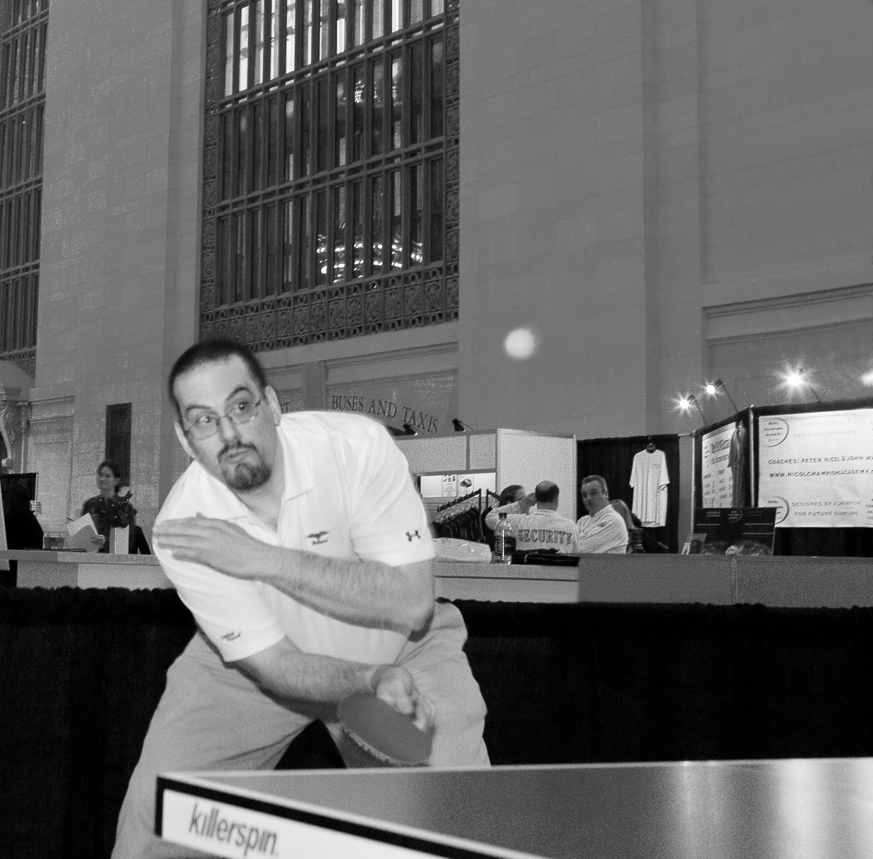
Jeffrey Getzin

Jeffrey: Thanks, Alison. I’d be delighted to!

In the Kingdom of Bryanae, there is none more feared than Willow, the elven Captain of the King’s Guard. She is one of the deadliest creatures who has ever walked on two legs, having obsessed about weapons and combat for 150 years!

When we first meet her, she’s a bit of a cypher; she’s abrasive, emotionless, and obsessed with discipline, but through the course of the story, we find out why she is this way, and a large part of the book is about Willow coming to terms with her past and becoming a whole person.

As for being strong, oh yes. Yes indeed, she’s strong. She’s dedicated her entire life to self-discipline, and is driven like no protagonist you’ve ever met. She’s like a Terminator with a rapier and pointed ears. Through the course of the book, she suffers countless injuries and runs up against what look to be insurmountable obstacles and unbeatable foes, but Willow never gives up.

AdL: As you went through the writing process, how were you able to access edits and beta reads? What feedback surprised you the most?

Jeffrey: The first reader of Prince of Bryanae was my girlfriend Kate, to whom the book is dedicated. She was my focus group for characters and plot, and I depended heavily on her reactions. If she liked a hero or hated a villain, I knew I was on the right track. If she didn’t react the way I had hoped, I’d tweak the book to bring them more in line with my intentions.

After the first draft was done, successive drafts were read and critiqued by writer friends, writers groups, and even co-workers. Prince of Bryanae went through literally dozens of revision cycles. Even so, I still catch the odd typo to this day!

AdL: Tell us about the language in POB. What words did you create or use to reflect the action in the book?

Jeffrey:  There are several languages spoken in this book.

First, there is Szun Universal, which is the language spoken by most humans in my world. I wrote that language using English, a language which which I have a passing familiarity. ;)

Second, there is the language of the invading humans. Initially, they are simply referred to as “barbarians” but later we learn that they are called Kards. I invented their language.

Third, there is the language spoken by the elves of Willow’s homeland. Initially, I used an invented language, but later in the book, it became the new “default” language and was represented by English. (An interesting side effect of this is that when an elf encountered someone who spoke Szun Universal, previously represented by English, he heard it in a made-up language that sounded English-like.)

Of course, when I say I invented these languages, I don’t mean I went to Tolkien lengths and wrote entire vocabularies. Instead, I got a good feeling of what each language should sound like, and a very rough idea of its grammar. I invented words only as I needed them, though I made sure to reuse them when appropriate for consistency.

[Begin Spoiler]

Finally, the protagonists actually meet an honest-to-god Szun, and not just any Szun but the one who invented Szun Universal! It turns out that over the centuries since its invention, humans have been mangling the language, so when we meet the Szun, he essentially speaks English in its “original form.” I structured this original form borrowing heavily from the Latin grammar, where verbs appear at the end of sentence, but I took it to an even greater extreme, where words are listed in increasing order of “importance” (modified by precedence). The result unusual the least is to say.

[End Spoiler]

AdL: Please share a passage from your book that you really enjoyed writing.

Jeffrey: Here is a passage of which I’m particularly fond. In it, Willow has run into her mother after being estranged for over a hundred years. It was a lot of fun to write because it has snappy dialog, and also, it’s the first time we get a clue about the nature of Willow’s childhood.

“You’re looking well, Waeh-Loh,” said [Willow’s mother]. “Other than the dark circles under your eyes, that is.” Her eyes surveyed Willow, had already glanced at the shabby cowl she wore.

“Thank you, mother,” Willow said, ignoring the barb. “You’re looking well, too.”

And she was. Tee-Ri looked extreme, barbaric, vulgar, yes. But she also looked beautiful, voluptuous. The two appeared about the same age, which was just another of the many lies of time as measured by elves.

The two women regarded each other. Around them, more spectators were arriving on the scene, gawking and chattering among themselves. Two elves in Bryanae: that ought to keep them steeped in gossip for years. Not that they didn’t already have a lot to talk about after Willow’s failures and subsequent demotion.

“Your father sends his regards,” Tee-Ri said.

Willow arched an eyebrow.

“Really? Who is my father these days?”

The corner of Tee-Ri’s mouth twitched. She had always been well adept at lying to herself. No doubt, she had convinced herself that this man really was Willow’s father.

“Jabar,” Tee-Ri said. “The great-grandson.”

“Ah, keeping it in the family, are you?”

Tee-Ri’s nostrils flared, and she sprung towards Willow with a hand raised and the backhand slap already headed towards Willow’s face. She stopped, though, when Willow’s rapier whisked from its sheath and pointed at her throat.

Tee-Ri’s porcelain face turned even whiter as she looked down at the rapier. Her face reddened.

“You would draw steel against your own mother?” she said.

“You would strike your own daughter?”

Tee-Ri took a step back, and Willow lowered her rapier but did not return it to its sheath.

“You’ve changed,” Tee-Ri said.

“You haven’t.”

Tee-Ri’s face registered the wound. For just a moment, she showed her age, and she was a sad, tired woman.

“I’m a practical woman, Waeh-Loh. The world changes, trees sprout, trees die. One either flows with time or is swept aside by it. Surely, you must know this. Or has your life among the humans turned you into one as well?”

“You tell me, Mother. You’ve spent more time in their beds than I have.” Tee-Ri’s cheeks were now a bright red. Willow pressed her attack. “And while you’re at it, Mother, when’s the last time you gave any thought to my real father?”

Tee-Ri raised her hands in half-surrender. She smiled ruefully.

“Like I said, I’m a practical woman.”

“You’re a cold, heartless bitch.”

“Ah,” Tee-Ri said, her eyes sparkling with malice, “and I see you’ve grown up to be just like me. Just look at yourself. Your hair is like straw, your body is a cylindrical lump, and your face looks like it hasn’t smiled in a thousand years. At what point did you decide to stop being a woman, Waeh-Loh? At what point did you decide to stop being an elf? My lovely, smiling, darling daughter has grown up to be a calcified statue of an old man. You can’t even get within a hundred leagues of Bryanae without hearing of the famous stoic elf Willow, that humorless, single-minded shadow of a woman.” Tee-Ri snorted. “Why, I’ll bet you’re still a virgin.”

Willow pressed the point of her rapier against Tee-Ri’s throat again. Willow’s hand shook with the effort to restrain herself.

“You know that’s not true,” Willow said with a small quaver in her voice.

Tee-Ri retreated a step, but Willow advanced, keeping the rapier pressed against her mother’s throat.

“Tell me why I shouldn’t kill you.”

“Because I’m your mother!”

A grim smile played at the corner of Willow’s lips. She pressed the point of her rapier an infinitesimal distance further into Tee-Ri’s throat.

“Not good enough.”

Tee-Ri started to shake. Her eyes cast about, seeking help. All around them, the fair citizens had gathered to watch the spectacle. The mood was of curiosity, though, and not of outrage. The people of Bryanae were excited, yes, but no doubt looked at this confrontation as delightful entertainment.

“There are people around. They’ll see!”

Willow shook her head.

“Not good enough,” she said. She pressed the rapier in a little more. A thin stream of blood trailed down Tee-Ri’s slender white neck.

“Stop it, Waeh-Loh!”

“It’s Willow.”

“What?”

“Call me Willow. That’s my name now.”

Tee-Ri began to cry and hyperventilate. She inserted sporadic sobs as punctuation.

“You can’t kill me!” she said.

“Oh? Why not?”

Suddenly, Tee-Ri’s eyes focused.

“Because I’m here to deliver Warlord Jabar’s terms.” Buoyed by this revelation, a small smile played upon Tee-Ri’s beautiful, savage face.

A cold lump formed in Willow’s belly.

“Terms?”

Tee-Ri’s smile broadened. She took a step away from the rapier. This time Willow didn’t compensate.

“Yes, terms. You didn’t think that it was just a coincidence that I came to see you when I did, did you? Don’t be ridiculous. Terms for the return of your prince, of course.”

AdL: Tell us about self-publishing. What challenges have you encountered?

Jeffrey: At first, I thought that self-publishing was admitting that I couldn’t hack it as a “real” writer. Until only recently, self-publishing was also known as “vanity” publishing, and was considered a form of literary masturbation.

Recently, that’s changed. As the price of print-on-demand publishing has decreased, and with the arrival of portable digital readers such as the Kindle and the Nook, the barriers for admission have lowered for self-publishing, and the value-add of traditional publishers has diminished.

I mean, what do traditional publishers actually do for you?

They critique and edit your book, but this is something you can do yourself if you have enough gumption, elbow grease, and some talented friends.

They engage an artist for the cover photo, but again, you can do this yourself. I was fortunate enough to find Carol Phillips to do my covers and I’d stack her work against the majority of the artists doing “professional” books. There are a lot more talented artists out there, too, so again, it just takes hard work (and money) to locate one and to commission a good cover.

They typeset your book for print. Once more, this is something you can do for yourself with a little research, a little moxie, and a lot of hard work.

Finally, they handle the book promotion. Here is where it gets difficult for the self-publisher, as you have to be your own publicist. It’s difficult, especially if like me, you have a full-time job that doesn’t leave you a lot of spare time.

Nevertheless, self-publishing has many perks. Chief among these is that you have chief and total control of your product. The book that’s published is the book you wanted to publish, not the book some editor felt was more sale-able.

This is, of course, a double-edged sword. A professional agent or editor knows what’s likely to sell. “All” you know is what story you wanted to write. Maybe you’ll luck out and they’ll be the same thing, but maybe you won’t…

AdL: What are some of the unexpected joys that you’ve found in your self-publishing journey?

The least expected and most rewarding experience has been the strong positive reaction I’ve received from such a diverse group of readers. I’ve managed to reach people I never expected to reach, and touch them in ways I’ve never expected to touch them.

For example, while I don’t come right out and say it in my novel, Willow is suffering from Post-Traumatic Stress Disorder. It turns out that one of my readers has a soldier for a husband who suffers from PTSD, and they both loved the book! They told me that my portrayal of PTSD was accurate, and they both enjoyed a story where the heroine was a fellow sufferer.

Another surprise came when I learned that the teenaged daughter of an old friend had come across the book, and loved it. Now, Prince of Bryanae is pretty dark in places, and it’s very violent as well, so I never even considered teenaged girls as a target demographic; it just seemed like something that wouldn’t appeal to them. I was delighted to be wrong on this. It absolutely made my day when I heard from her.

However, the most poignant experience has to be regarding my friend Dan Copeland. He and I trained in Brazilian Jiu-Jitsu together, and then he was diagnosed with brain cancer. But Dan was one hell of a fighter, and even showed up to his some of his chemotherapy appointments in his gi (uniform). Well, I gave Dan a copy of the book and he became an enthusiastic supporter of it, even reading it multiple times!

Dan recently lost his fight to cancer, but it touches me that first, I was unexpectedly able to bring some pleasure into his life with this book, and that second, someone as brave and strong as he would could find it worth reading. When you’re diagnosed with brain cancer, you pretty much know the clock is ticking and yet he found it worthwhile to read my book multiple times. I can’t begin to describe how honored I feel by this.

AdL: Are you working on a new book now?

Jeffrey: I have a novella called “Shara and the Haunted Village” that will be coming out soon. It’s about a starving seamstress who leaps at an unexpected chance at riches and adventure when a shadowy pair of adventurers asks her to lead them to a haunted village.

Next in the pipeline is another novella called “A Lesson for the Cyclops,” in which a circus freak falls in love with a rogue who’s on the run (and when is a rogue not on the run?), and how her life changes from the encounter.

After that, I actually have the first book I ever wrote, a prequel to Prince of Bryanae called King of Bryanae. I wrote it many years ago, and while there’s a lot of good stuff in it, there are also many problems with it. I plan to edit and revise this novel and make it something worth selling.

Next, I just started a new story, as yet untitled. I’ve written a single chapter, and I’m not sure where it will lead, or if indeed, it will lead anywhere.

Finally, I have a story for a third novel in my Bryanae series bouncing around in my head. It’s not quite there yet. I need the story to stew a little longer before it’s ready to commit to the page. :-)

AdL: What advice do you have for those who are considering self-publication?

Jeffrey: Write the best book you can. Spell-check. Have lots of beta readers; listen to them. Spell-check again. Revise. Rinse. Repeat. Only when you’ve made your book as good as you possibly can should you start the publication process.

Then, learn to be patient. There are so many good books out there by so many talented authors, that even if you’re the next Harper Lee, it’ll take a long time for your readership to grow.

Finally, develop a thick skin. Not everybody’s going to like your book; indeed, some will hate your book. If you’re not prepared for that, then you should not publish. While most of my reviews have been very positive, I’ve received a few 1- or 2-star reviews that would strip paint from furniture. You have to be able to withstand that if you expect to have any pleasure from the experience.

AdL:. Take a section from Prince of Bryanae, and rewrite it from the point of view of a minor character in the scene to create a short of about 250 words.

Jeffrey:

The thunderstorm had so thoroughly doused Don-Lan that he felt there wasn’t a dry spot on him. Every piece of fabric he wore was saturated to capacity: every drop of rain just rolled off his clothes onto the splashy mud through which he trudged. Around him, the other elves and the human soldiers sputtered and stumbled alongside him in the swamp that hours ago had been a field.

The princess had given him one job to do: lead them back to Headquarters. It had seemed so simple at the time, but with the rain assaulting them and the sky as black as night, how could he be sure they were heading in the right direction?

Another explosion of thunder deafened him, and moments later, a flash of lighting lit up the field in stark relief. Don-Lan’s heart pounded in his chest, terrified that any moment he and the rest of them would be electrocuted.

The human officer, the one with the mustache, trudged through the mud up to the princess and shouted something into her ear. She said something in reply, shaking her head, and Don-Lan could see the frustration on the human’s face. Then the black human joined the fray and shouted something else.

The princess shouted something unintelligible to first the one with the mustache and then to the black one.

The black man replied, defiance evident in his demeanor. To Don-Lan’s astonishment, the princess slapped him.

The black man bared his teeth in rage and wrapped his hands around the princess’s throat.

Chaos ensued.

Don-Lan ran forward to try to break up the fight. Pree-Var-Us evidently had the same idea, as he was running alongside him. The princess fought against her assailant: kneeing him, scratching and kicking at him, desperate for air. The human officer drew his sword.

Pree-Var-Us waved his arms, shouting at them to stop killing each other, that they had a common foe.

Then there was another blast of thunder, and suddenly Pree-Var-Us had no head. His arms continued to flail, but blood jetted from his neck, and then he fell to the ground and was still.

The black human released the princess, and she and the two humans gawked in astonishment and horror at Pree-Var-Us’s corpse.

(Fiction passages © Jeffrey Getzin)

Paraskevidekatriaphobia*

Should fiction writers avoid obscure words that a few readers might have to look up?

I don’t. One of my role models in that is Anthony Burgess, who started his wonderful novel Earthly Powers with this sentence: “It was the afternoon of my eighty-first birthday, and I was in bed with my catamite when Ali announced that the archbishop had come to see me.”

I had to go and look up the word “catamite” before I could read any further. (I had to look up a whole lot of other words when I was reading Burgess, too, although sometimes I just figured the meaning out from the context. That method also works most of the time.) I’ve never forgotten what “catamite” means, nor have I ever forgotten that first sentence.

In my writing, if the right word is an obscure word, but it’s the perfect word – in it goes. I know that at least some readers are going to know the word, and the most discerning readers are going to “get” exactly why I used it, and be pleased.  I am incapable of putting in anything but the word that feels right to me. Why should I?

Some of my readers here write steampunk novels and science fiction, and there are often words in those books that are understood only by devotees of the genre: why should general fiction be any different?

Nowadays on Kindle you can look the word up right in the middle of a sentence, and I don’t think it hurts people to learn new ones. I know my life is richer since I read Burgess.

Every word and every comma in my novels and short stories is deliberately, carefully placed. For a reason. The reason has to do with meaning sometimes, and sometimes with rhythm. There is poetry in a sentence, and I need to find it. To me, that is the best part of writing.

How about you?

(P.S. All of that said, do not fear: there are only about five or six truly dense words in The Whole Clove Diet, and all of them are explained right in the sentence either by the narrator or by someone else. I know I am not Burgess. :) )
*Paraskevidekatriaphobia: Fear of Friday the Thirteenth  (the date, not the movie)

Terry McMillan, Randall Robinson, David Carty and The Conclusion of A Remarkable Festival

Anguilla Lit Fest: A Literary Jollification, held May 24-28, 2012 on the beautiful Caribbean Island of Anguilla

There are advantages to those times when  – despite your best intentions – you find yourself unable to complete your posts about an event until more than a month after it is over. First, you get to take a little break in the reality you have since resumed to re-immerse yourself in the pleasures of the experience— reflecting on events that you had almost forgotten about already, and thinking again about the eloquent, talented and friendly people that you met.

Distance and time also distill your memories, allowing you to discover which of them are likely to remain most strongly with you into the future – some of which have, indeed, already provided grist for thought at unexpected moments in the middle of your busy daily life.

In the case of my attendance at Anguilla’s first annual (I hope: see note below) Lit Fest, amid a host of jewel-like memories of warm evenings, Caribbean vistas, elegant wine-and cheese receptions, exotic dinners, intriguing cultural presentations, and stimulating conversations, four sessions in particular give me great pleasure to recall:

  • Terry McMillan, author of How Stella Got Her Groove Back, Waiting to Exhale, and several other books (and honorary patron of the LitFest), spoke at lunch on the second day of the festival on the topic, So You Want to be a Bestselling Author? The Real Deal. The points Terry offered to new writers included these (in no particular order): 1) true stories of things that “really happened” to you are not as interesting to other people as you think they are –

    Terry McMillan luncheon talk

    they must be given a dramatic structure in order to become good fiction (as an extension of this point, Terry pointed out that her own novels are not autobiographical. They may be similar to what really happened to her, but they have been transformed into fiction); 2) don’t write for other people (i.e., to sell, or to win awards) – write for yourself. Similarly, do not let what the critics say bother you or affect your future work – just keep writing for yourself; 3) fiction writers need to know many, many more details about their characters than they will ever tell their readers; 4) don’t edit while you write; 5) write the way your characters would speak, not to impress your audience – nobody cares how smart you are; 6) stop at the end of the writing day mid-sentence or mid-paragraph so that you don’t have to face a blank page the next day, but can resume your story in the middle of an interesting scene; 7) don’t worry about how the story is going to turn out or what is going to happen next – just write (Terry says she doesn’t like writing screenplays because she knows how everything is going to turn out, which is boh-ring); 8) writing is a journey. Enjoy it! (Note: Terry also did a Master Class called “Honing Your Gift” on Saturday morning. I arrived just as it was concluding and the audience response was overwhelmingly positive. I wish I’d heard it all. If any readers here were there, please add a comment and give us a taste of what she said that day. To the rest: don’t ever pass up an opportunity to listen to Terry McMillan talk about writing – or anything. She’s great!);

  • On the last evening of the Festival David Carty, historian, author, and producer of the documentary film Nuttin Bafflin (“a small community of 5000 former slaves on a tiny island in the North Eastern Caribbean mold the accidents of history with their struggle

    Upstairs at Davida’s, the restaurant where the final evening’s session was held

    for survival and develop a unique brand of boat racing practiced nowhere else on earth”) gave a fascinating and often amusing history of Anguilla and its talented boat-builders. Anguillians have for centuries been known around the world for their skills and talents atbuilding boats, and are fanatical boat racers as a consequence. You can get a sample of Carty’s wonderfully sincere, knowledgeable, intelligent and somehow also light-hearted storytelling style in this video on YouTube;

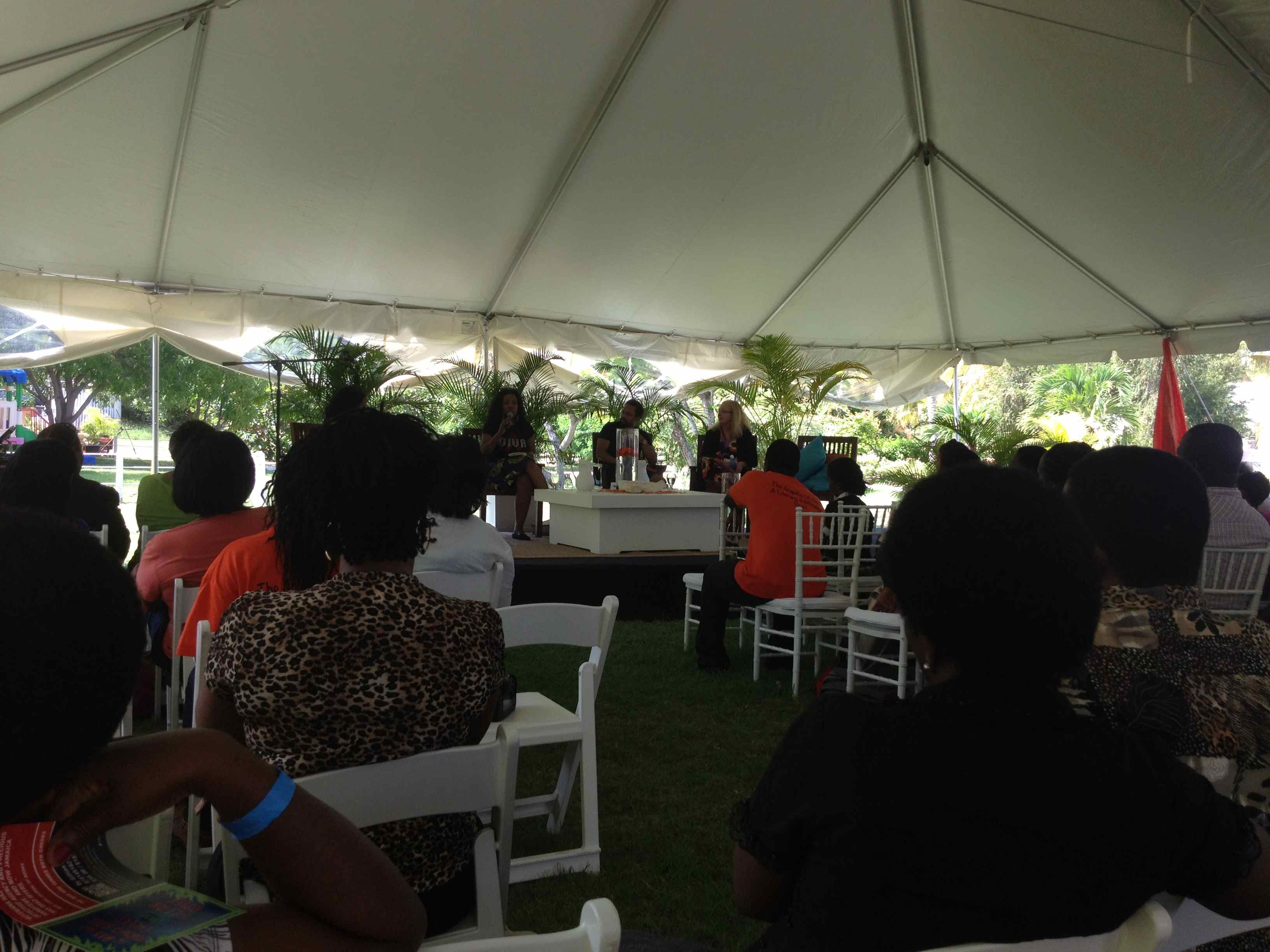
  • The second and final panel in which I participated was entitled Artists on the Page. It was moderated by the gracious and eloquent Allison Samuels, a senior writer for Newsweek/Daily Beast and author of What Would Michelle Do: A Modern-Day Guide to Living with Substance and Style. The panel featured, in addition to myself, the enthusiastic and inspiring performer-authors Hill Harper and Sheryl Lee Ralph. We all agreed that you have to make time in your life to fit the writing in, no matter what else you are doing (Hill says he writes on tv and movie sets while he’s waiting for his scenes), and that writing provides a way of interpreting (and sometimes escaping from) the vicissitudes of life. Both Hill (e.g., The Wealth Cure: Putting Money in its Place) and Sheryl (Redefining Diva: Life Lessons From The Original Dreamgirl) have written books in which they have drawn from their own experiences, challenges and triumphs to inspire and motivate readers;
  • Last but certainly not least, Randall Robinson was an absolute joy to listen to. He spoke of major issues that face African Americans and those living in the Diaspora today in such a knowledgeable and eloquent way that it became for all of us listening a call to action… although I am not sure what I as an overly white Canadian can do to

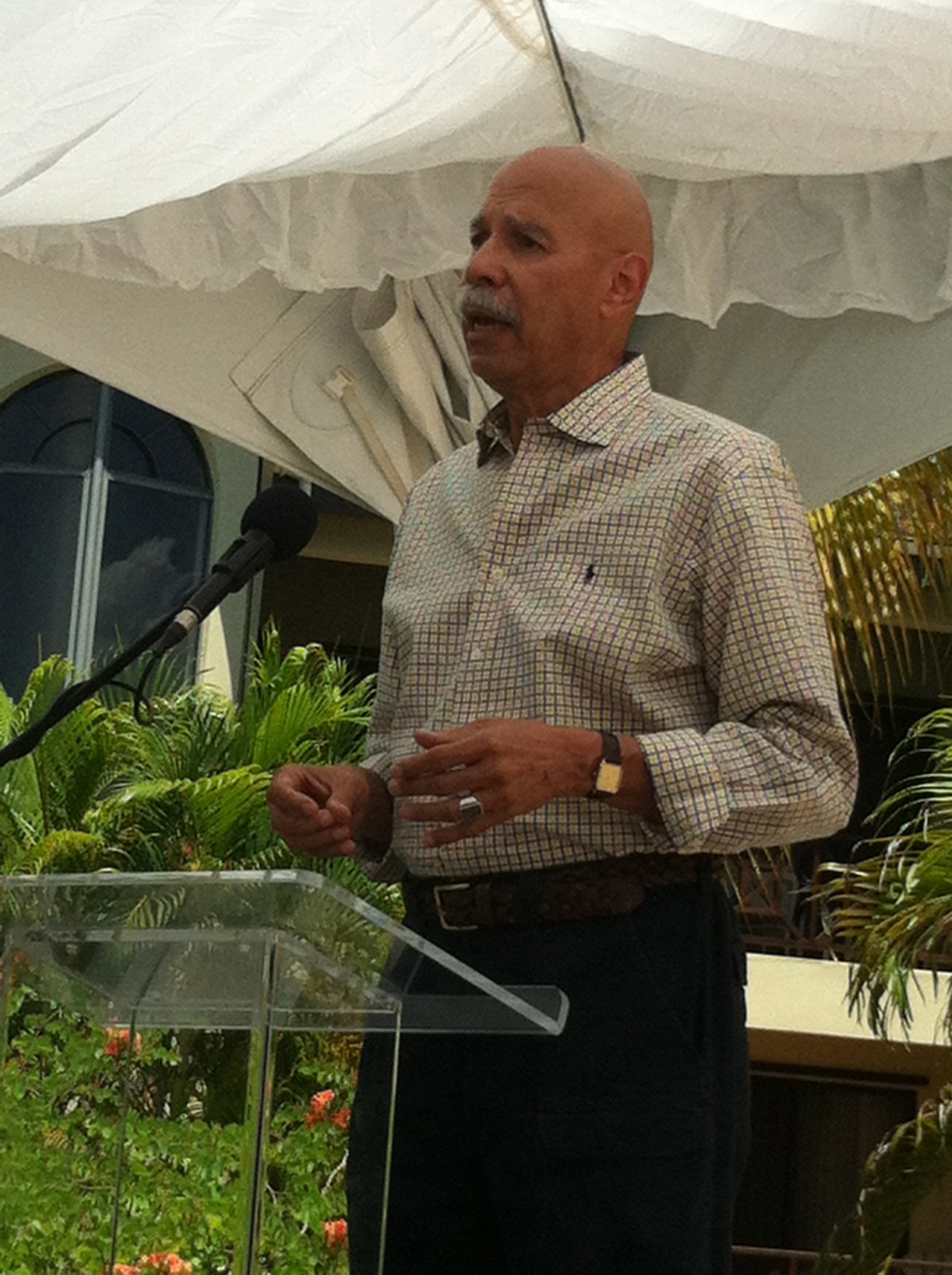
    Randall Robinson speaks at the Thought Leaders’ Luncheon. Topic, “We Are One: Writing About The Diaspora”

    help, except listen, learn, hope to understand, and remain open to opportunities to help other people to understand. Randall Robinson is so well spoken and gentle in his delivery (you can see a fine example here, at a book launch at Hue-Man Books in NYC, where he delivers a mesmerizing first-hand account of the coup that removed Jean-Bertrand Aristide from Haiti in 2004, and the Haitian history that provides context for that event) but you know and hear that he is outraged and determined in his heart. He loves his people and – despite the gains that were made in the U.S. during the Civil Rights movement – he despairs at the current portrayal in the media of so many African Americans as dysfunctional parents, drug addicts and criminals. Among the points he made that were very interesting to me because I’d never thought of them before was this: he talked about how in the community where he’d grown up, the teachers and lawyers and preachers and store-keepers lived across the street from and next door to the prostitutes, low-wage workers, and the unemployed. When integration began, it was those who were professionals and had money who moved “uptown,” leaving the less educated and the poor behind. This phenomenon, repeated across the U.S., has contributed to the current situation where the “black communities” today tend to be poor areas with major socio-economic problems. That is just one example of the many insights I gained from listening to Randall’s talks, and I am looking forward to reading his novel, Makeda – which he said he wrote in part to address the fact that one of the major losses experienced by African Americans during slavery was their history. (The New York Journal of Books said, “Makeda is beyond ambitious and imaginative . . . well written and powerful, with an ending that is equal parts tragic and romantic in nature . . . a breathtaking revelation, weighted with romance and lovely passionate prose.”) Update Josveek Huligar has posted this clip from Randall Robinson’s Anguilla writing workshop on YouTube.

There are other people I want to talk about more in future who I met at the Lit Fest in Anguilla, and I hope to do profiles of them and their books. In the meantime, I only wish that more of you could have attended. Even though I have been writing fiction for more than thirty years now, it left me feeling fresh and new and eager to get back to my fiction. And it was no passing whim: more than a month later, thinking about that weekend still provides me with real motivation to get back to work on my next novel.

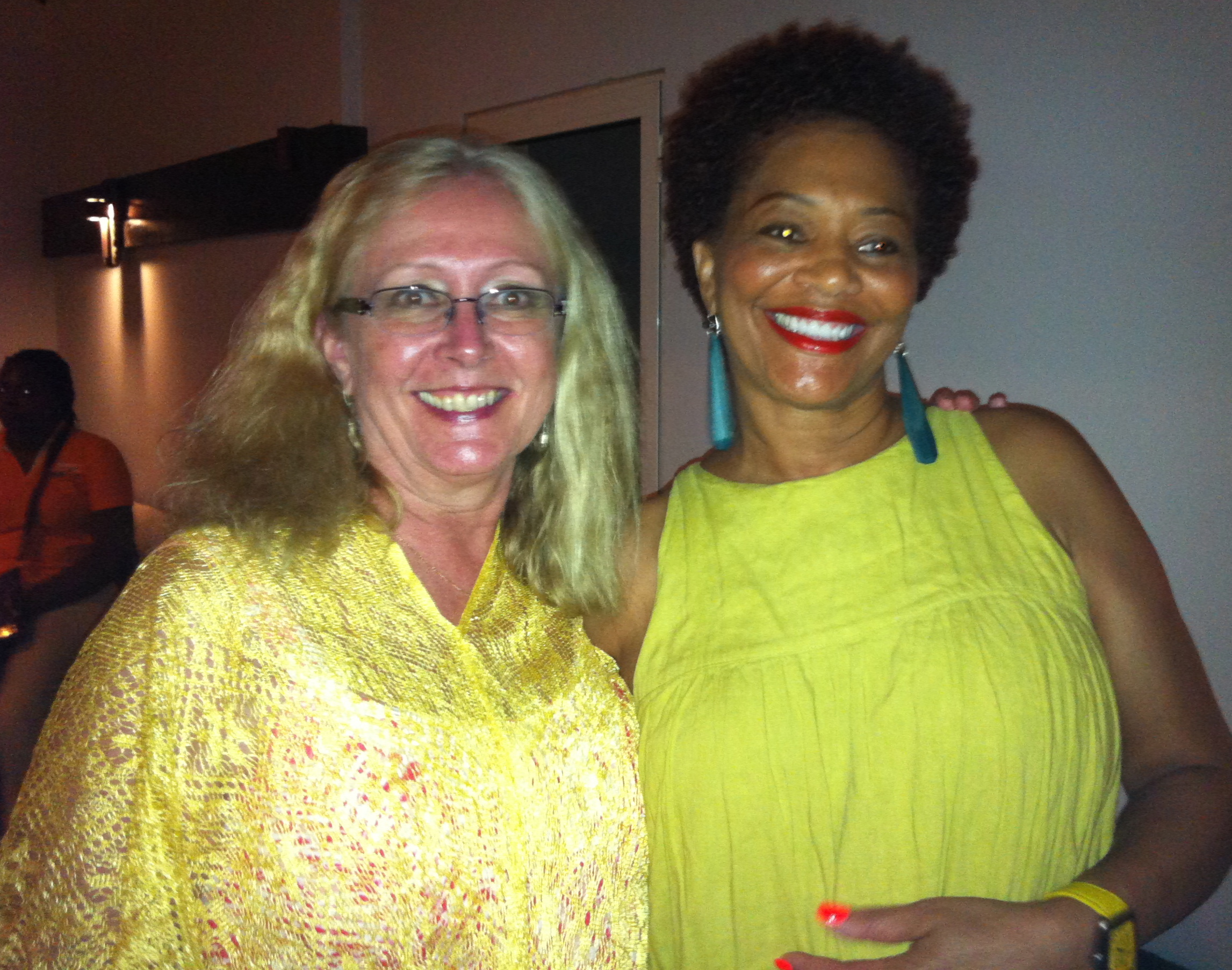
Mary and Terry, final evening

____________________

(Note re: the “first-annual-ness” of the Anguilla Lit Fest – while everyone who attended would, I believe, love to see this become an annual event, it takes a lot of work and a lot of money to put on a splendiferous literary festival like this one was, and Anguilla is a small island with a limited number of volunteers. So keep your fingers crossed — or, if you’re in the region, contact the Anguilla Tourist Board and see if there is anything you can do to help.

Thanks to Gerald A. Riskin for files and photos

Anguilla from the air, en route back to St. Maarten and thence to Miami and Toronto.

On the beach, after the festival was over. Anguilla.

The New Publishing Rules: Panel Discussion, Anguilla Lit Fest

“Writing Is Just The Beginning: The New Publishing Rules”

 Anguilla Lit Fest Panel Discussion, Friday, May 25, 2012

Moderator: Stephanie Stokes Oliver (Author/ Editor; USA/Anguilla) Panelists: Malaika Adero (Vice President, Senior Editor, Atria Books/Simon & Schuster, USA), Marva Allen (Hue-Man Bookstore/USA), Marie-Elena John, Author (Antigua/USA), Lasana Sekou (Author, Founder of House of Nehesi Publishers, St. Martin), Mary W. Walters (Writer/Editor, Toronto, Canada)

Left to right on panel: Stephanie Stokes Oliver, Lasana Sekou, Malaika Adero, Marva Allen, Mary W. Walters, Marie-Elena John. (Photo: Gerry Riskin)

How do you get three publishers, six writers, five editors, and a bookseller onto a panel when there are only six chairs on the platform?

Well, welcome to the world of writing and publishing ­– as it always has been, and as it always will be. For centuries, many, many writers have turned their attentions away from what they were creating and contributed at least some of their time to the editing, printing, promotion, marketing, and distribution of books – theirs and others: sometimes because they needed work (although the pay has never been that great), sometimes to get themselves and their friends into print (a lot of fine publishing houses were started this way), but mostly because they cared about books and wanted to make sure that the best found their intended audiences.

Stephanie Stokes Oliver, Moderator

Over the past hundred years or so, as the publishing process became more refined and some people began to suffer from the illusion that there could be money in the books business, some publishing houses became larger and larger, and the bigger those companies became, the fewer the number of writers who were involved, especially at the top. This made good business sense. We all know that serious writers are lousy at business. Many would rather read a “good” book than one that sells a million copies overnight. (Do not start in on me again, I am not dissing all the vampire novels or all the romance novels or even all the vampire romance novels: just the poorly written ones. No matter what the genre, there is no excuse for bad writing, and even less excuse for reading bad writing.)

However, as I have maintained all along (even in my very first Militant Writer post, “The Talent Killers,” which really was intended to be partly tongue- in-cheek), those who love great writing have always continued to infiltrate the publishing business. These literature aficionados are especially visible in the smaller presses, but we still find them occasionally at the larger ones as well, particularly in the role of editor.

Finding A Platform

One of the most difficult aspects of the impact of the new technology on the books business, in which the publishing model as we have come to know it is dissolving before our eyes, is how writers and other people who love great writing can continue to talk to one another. There is a tremendous temptation among those of us who have begun to self-publish to be defensive and self-righteous, and a similar impulse among those of us who have not.

There are, however, a number of issues on which we can agree:

1)    the manuscripts of self-published authors have not been vetted and preselected by independent, experienced editors before they become books: there is no quality control. As a result, a majority of the books that are self-published are junk;

2)    most self-published authors cannot afford to (or choose not to) invest in top-notch substantive and copy editors or book designers and layout artists. Therefore the majority of self-published books are not only junk, they are badly edited and poorly laid-out junk with crappy covers;

3)    for many, many years the established publishing system has – despite its inherent flaws – offered the only truly workable system for weeding out the good writing from the crap and getting it to readers;

4)    in recent years the traditional publishing system, because it is profit-based, has become unworkable not only commercially but from a literary perspective as well;

5)    some truly outstanding writers, with strong track records in the established publishing business, are discovering that self-publishing offers them an opportunity to control their destinies for very little cost, and to increase their profits;

6)    the new possibilities offered by technology have created not only self-published authors but also e-books, which have been adopted by readers en masse, and which are taking down independent booksellers one at a heartbreaking time.

So where does that leave a panel of intelligent, dedicated committed writers, readers, publishers, and one of the most well respected independent booksellers in the USA? Well, it is a testimony to the perspective and vision of the participants of the panel discussion that was held at Anguilla’s first LitFest on the morning of May 25, and its moderator, Stephanie Stokes Oliver, that we were able to engage in a lively discussion and find our common ground rather than increasing the size of the fissures that currently threaten to separate us.

Publishers

Lasana Sekou of House of Nehesi, panelist

The three publishers on the panel were Lasana Sekou, founder of the House of Nehesi,  Malaika Adero, vice president and senior editor at Atria Books, a division of Simon & Schuster, and Marva Allen, a director of the new independent publishing house Akashic Books. In answer to the opening question, they explained the traditional publishing model: how a manuscript is selected for publication, edited, designed, laid out, released and then promoted. They described the challenges  – historical and new – that face publishers: not only the big-picture issues (most notably economic ones) but the day-to-day frustrations.

From them we heard that: senior editors at major houses have to deal with marketing divisions that veto excellent manuscripts because they will not sell; publishers face such avalanches of unsolicited manuscripts that they are unable to even look at unagented material; publishing houses must sometimes turn away promising writers because they are so pig-headed and misguidedly arrogant that they will not allow their work to be edited; the new technologies mean that already overburdened senior editors need to get all of their authors’ books into e-book format – and not only the new releases, but the backlists, too. We learned that they are saddened when good books must be turned away, that they feel a responsibility to ensure that fine stories continue to be told, and that they respect and want to sustain the voices that tell the stories they admire, and the ones that move them.

Editors

After the panel: Malaika Adero (r) and me

The editors on the panel were (in addition to Lasana, Malaika and Marva, who were also all editors as well as publishers), Stephanie Stokes Oliver, editor of Unity Books and former editor of Essence magazine) and me, freelance Book Charmer and manuscript editor.

All of us (and all of us as writers as well as editors) agreed that even the best-written manuscripts need strong editors. Writers need substantive editors who will tell them where their manuscripts are working and where they are not, what characters need to be developed more and which ones less, what isn’t clear to readers and what needs to be omitted.

These editors need to be people who can help the writer say what the writer wants to say in the way the writer wants to say it: and who are willing to listen to what the writer says in response to editorial suggestions. The editor lets the writer do all of the necessary edits and revisions. A good editor never does the rewrite.

We all also agreed that books need to be well copy-edited before they are published (and winced at what we’ve seen out there in some self-published books, but also in some books from well established presses.)

I expressed the opinion that I have stated before on The Militant Writer, that the era is coming when some editors’ private imprints will have cachet – independent of publishing houses (as translators have done in the past). If you are self-publishing and have attracted a certain well-respected editor to work with you on your book, you will put his or her name on the cover as your editor, and that will alert readers to its quality. Top editors will be able to hang out their own shingles and make some real money for a change. And they’ll be able to pick and choose the manuscripts they work on. (Some will say they cannot afford to hire editors. If you put aside $5/week for the two years or more when you would be waiting for a publisher to make a decision  on your manuscript, put it in the publishing queue, edit it, typeset it, print it, and release it, you will have no trouble saving up enough money to pay an editor – and a book designer.)

Bookselling

Marva Allen, panelist (l), and me – after the panel

To my mind, booksellers, particularly independents, are the innocent victims in the transition to new publishing models. This has less to do with the proliferation of self-publishers than with the growing popularity of e-books. Marva Allen, whose Hue-Man Bookstore in Harlem has an international reputation, is recognized for her contributions not only to fine writing in general and the writing of African-Americans in particular (“A SKU for every hue”) but to the building of the reputations of a number of important individual writers.

She told us that the economic reality of bookselling has reached the point where she is not sure if she will renew her lease.

Writers

Marie-Elena John, Panelist

All of us who were on the panel are writers. A couple of us – Marie-Elena John most notably (whose novel, Unburnable, I am eagerly looking forward to reading), but also including Lasana Sekou, Stephanie Stokes Oliver and I – are writers first and foremost, in our self-perception and our lives.  Malaika Adero and Marva Allen are writers too, and all of us on the panel shared concerns as writers and lovers of good writing about the traditional publishing industry – its slowness to respond, its inability to change (Malaika compared it to an ocean liner trying to steer its way into a tributary), its poor track record in promoting and distributing the books it does publish, and its increasing tendency to overlook quality fiction in favour of what a friend of mine calls “mental junk food.” (The name of Paris Hilton, “author,” came up in this context several times.)

Publishers used to argue that it was the books by non-writer celebrities that allowed them the financial stability to publish less economically viable literary works. No more: there is no financial stability in the business anywhere. As writers we understand this, and as readers and writers we’re in despair over what we’ve lost – even as new doors open for us.

The New Gatekeepers
As I have also said before, the readers are the new arbiters of what will sell and what will not. In recent months, we have seen a significant example in Fifty Shades of Grey – a book that not only found a kazillion readers for its author, but opened up a whole new genre of writing. Within weeks, imitators were putting out their erotic novels by the hundreds. And it wasn’t only other self-published writers who were proving that when you are trying to make a buck, imitation is the sincerest form of flattery: it was the established publishers as well. (Most of the rest of us just stood around turning Fifty Shades of Green.)

To my mind, the ability of a writer to reach directly out to readers – eliminating the middle people – and the ability of readers to respond – by throwing rotten eggs at us or by welcoming what we’ve written and spreading the word to other readers – are some of the most exciting aspects of this evolving, truly democratic world of publishing. But the evolution also has produced so much garbage that it is hard to find the glints of precious metal that are surely in it somewhere.

To find the best books, we are going to continue to need great book reviewers who establish reputations for themselves – often in specific genres. Their stamps of approval will mean as much in future as does a review in the New York Times today. Unfortunately, given what’s happening to newspapers and magazines (which pay almost nothing to reviewers anyway), most of these future king- and queen-makers will consist of unpaid bloggers. (Oh, and Oprah: whose book club, I have heard, is back.)

The publishing panel discussion at the Anguilla LitFest was invigorating, with the love of literature and great writing forming a common bond among panelists and audience members. In addition to our conviction of the importance of continuing to write, find and promote good writing, we were also all in agreement that electronic books and self-publishing are here to stay. We are going to have to learn to live with them – and with one another – in this rapidly changing world.

__

(Note: Thanks to Gerry Riskin for most of the photos on this page.)

Anguilla’s First Ever Literary Arts Festival: A Jollification

I am honoured to have been invited to be a panelist at

Anguilla’s First Ever Literary Arts Festival: A Jollification..

The guest speakers include:

Hill Harper, Author/Actor
Terry McMillan, Author/Professor
Randall Robinson, Author
Malaika Adero, Author/Publisher
Crystal McCrary, Author/Editor
Lasana Sekou, Author/Publisher
Sheryl Lee Ralph, Author/Actress
David Carty, Historian
Amy Berkower, Author, Agent (USA/Anguilla)
et moi

May 25 to 27, Anguilla, BWI (in the Caribbean)

Come one, come all.
Here is the itinerary.

http://ivisitanguilla.com/litfest-itinerary/

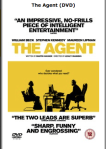
Review of THE AGENT, a film about a writer and his literary agent

The Agent

  • Directed by Lesley Manning
  • Written by Martin Wagner
  • Starring Stephen Kennedy, William Beck, Maureen Lipman
  • 80 minutes, available on iTunes

“It’s not a real gun, of course. It’s more a metaphorical one.”

What more gratifying line could a scriptwriter invite a desperate novelist to deliver as he raises his weapon toward the head of his indifferent literary agent? Even more satisfying—both to the plot and to any artist-viewers who may have been feeling powerless or even disposable of late—the metaphorical gun will force agent Alexander Joyce to create a bidding war among publishers for Stephen Parker’s second novel, Black: a property Joyce has already dismissed as hopelessly unmarketable. In fact, until Parker’s threat completely changes the dynamics between the two, the agent’s greatest aspiration for their meeting (which he has somehow fitted in between the kinds of intriguing things that agents do all day) is that Parker will simply go away —forever. Joyce has bigger fish to fry.

Parker has arrived for this meeting—by bus, four months after he first sent in the manuscript—full of hope and at the end of his tether. If this second novel doesn’t sell, his wife will likely take the kids and leave him. He will have to find a job. Backpacked and rumpled, Parker (equal parts nerdy insecurity and steely overconfidence, played to perfection by Stephen Kennedy) plies an emotional razor’s edge through his meeting with Joyce. He wavers back and forth from cowering submission to his agent’s every word, to desperate self-assurance as he sees his beloved manuscript moving closer to rejection. He will  “do anything” to get this novel published.

Joyce, for his part, is in the business of literary agency not because of any deep love for books: he’s a salesman, in it for the money. (“There are no real readers any more,” he scoffs to Parker at one point. “When is the last time you sat down and read a book just for the pleasure of it?”… to which Parker, mystified, replies, “Last week?”) In addition to his forceful explanation of the realities of publishing, Joyce (energetically and convincingly portrayed by William Beck) absently points out vague flaws in Parker’s new novel (the title is horrible, the characters too passive, it needs a bigger crisis … that sort of thing: unfortunately he can’t find his notes), and reduces Parker below even his normal level of dejection by reminding him that his first novel may have attracted good reviews, but there were no sales at all.

But Joyce does love his work. His passion is for the “the deal”: he loves to play one publisher off against another, to get the highest price possible for any book he does believe will sell—and then to wring out even more. As viewers, we are forced to ask ourselves what writers would not want agents just like this to represent them? We also recognize that Joyce’s concerns about Black sound valid—the novel is not dramatic enough to be commercial. Its author has no track record. He is not young enough, nor sexy enough, nor female.

By the time Parker draws his metaphorical weapon, we are utterly sympathetic to his plight—but, much to our surprise, we also feel some respect and understanding for the agent. We recognize that it is at this juncture, every day, in locations like this office, that creative genius meets the bottom line—the dollar, the yen, the pound—and we know that art does not often emerge alive from confrontations such as these.

The Agent, the film version of a play that ran in London in 2007, is in every way a story about perspectives. At the outset, only the writer has anything invested in the project—and he has everything invested (some might say too much, while others would say that without this degree of investment, “art” can never happen). To Stephen Parker, the 350 pages he is submitting to his agent represent several years of his past and all of his hopes for the future. But for everyone else along the line—from the postal clerk who stamps the package (and who forces Parker to admit straight off that it contains “nothing important”) through Joyce to the publisher (Lipman)—who is really looking for someone young and hot but will settle for a middle-aged author if a book is really really good (which this one is. She knows it. She has read it. Not in this case because the system works to get good literature to her desk, but rather because it doesn’t), it is just another manuscript, another day’s work.

But once the “gun” is drawn, the manuscript takes on new weight: suddenly its potential impact on the life of the agent is equal to its meaning for the writer.

One of the most remarkable achievements of The Agent is that it allows even the most irate and jaded writer in the audience to see that a literary agent is human too, with needs and goals that are important and worthy of respect in the larger world of publishing. Alex Joyce is not at all a bad guy. He is in business to feed himself, his family and the clients who are able to write in such a way that will earn them all a living.

There seems to be no doubt that Martin Wagner has written this script out of personal experience. The humour is bitingly real—from the writer’s knowing more about the agent’s assistant’s life than the agent does himself, to the physical inaccessibility of the agent’s office, to the parallels and variations between the lives of the writer and the agent (case in point: their dental work, or in Parker’s case, the lack of it).

Viewers with no connection to publishing (or filmmaking, or visual art, or to the music industry) will probably see The Agent as a droll drama set in a bizarre world far beyond their ken. Artists will see the film for what it really is: a story that contains the classic elements of both tragedy and comedy, with dialogue so real it will make them cringe, cause their eyes to tear up, and set their heads to nodding until their necks ache. They will find in The Agent a tale of horror, with a lining that—true-to-life—always seems for the artist to be more black and heartbreaking than silver.

___
The Agent was released directly to DVD, and is now available via iTunes and other outlets.

On using italics for thoughts

Don’t.

Some of you will send me examples of good writers who use italics for thoughts. Good writers can do anything. It is true. But a good writer does not need to use italics for thoughts. A good editor should help him/her get rid of them. I do. A good writer doesn’t even need to use italics for emphasis very often – which makes them more effective when s/he does.

Even great writers use italics for thoughts. I’m saying they shouldn’t, unless there is some particularly significant reason to do so. Otherwise they are just distracting (they are harder to read than plain text) and unnecessary – especially for thoughts that are more than a few words long. Our goal as writers (and editors) is not to distract the reader from the story by the text, and not to confuse the reader. The writing itself should become invisible, so that the reader can feel s/he has been transported and is having a real experience on the page.

(And as far as using quotation marks for thoughts — don’t even suggest it. Unless maybe your character is a mind-reader or psychic and is reading the thoughts of someone else.)

(And that reminds me. A pet peeve is writers who say, “She thought to herself….” Like who else is she going to think to??)

In a book I just edited, Billy the Kid’s Last Ride, we carefully put in italics with all passages that were in Spanish, followed by the English translation. The publisher stripped all the italics out during typesetting, for no reason I could understand, but it makes you think before you spend too much time using italics for any reason.

I draw your attention to this entry in the Chicago Manual of Style, to which all writers and editors should subscribe:

13.41 Unspoken discourse

Thought, imagined dialogue, and other interior discourse may be enclosed in quotation marks or not, according to the context or the writer’s preference.

 “I don’t care if we have offended Morgenstern,” thought Vera. “Besides,” she told herself, “they’re all fools.”

 Why, we wondered, did we choose this route?

The following passage from James Joyce’s Ulysses illustrates interior monologue and stream of consciousness without need of quotation marks:

Reading two pages apiece of seven books every night, eh? I was young. You bowed to yourself in the mirror, stepping forward to applause earnestly, striking face. Hurray for the Goddamned idiot! Hray! No-one saw: tell no-one. Books you were going to write with letters for titles. Have you read his F?

Mary’s Writing and Publishing Browsery for June 14 2011

Here is an (annotated, of course: I rarely keep my opinions to myself) accumulation of interesting items about writing and publishing that I’ve come across (or been referred to by others) in the past few weeks:

  • For the inside track on the appalling impact of previous sales figures on book-publishing decisions, check out Steven Henighan’s amazing article “The BookNet Dictatorship” in Geist. If you’re a mid-list writer who can’t get an agent or publisher to read your manuscript, maybe this is why. And this happens everywhere – in the UK and US, for example, as well as in Canada;
  • In this YouTube video, Margaret Atwood displays her drawing talents in a presentation to the O’Reilly Tools of Change for Publishing Conference in New York in February. I love her “Change Isn’t Good For Everyone” slide in particular (it is so Atwoodesque), but I think the half-empty glass she sees may also be viewed as half full it. Many of the problems she raises re: technology and books are caused by publishers, not by technology, and imho the structure that links writers (and editors!) inextricably with publishers and agents is already outdated. The United Artists model she suggests is relevant, and many groups of “indie-minded” writers are now banding together to apply that model to books;
  • Unbound is an independent publishing initiative where interested readers can pledge financial support to bring a writer’s work to press, helping to support the writing process of specific books in exchange for rewards such as lunch with the author and a mention in the acknowledgements (Kickstarter is a similar initiative that encompasses the range of creative projects.);
  • An item in Business Insider, “This 26-Year-Old Is Making Millions Cutting Out Traditional Publishers With Amazon Kindle,” profiles Amanda Hocking, the young author who is fulfilling the wildest dreams of legions of self-published writers by selling hundreds of thousands of her books and keeping 70% of the profits;
  • Another Business Insider article, “Suddenly, Amazon Starts Competing With Its Biggest Suppliers,” introduces Amazon’s latest initiative: its own publishing division. As fellow Writers Union member Art Slade pointed out, perhaps this will encourage other publishers to pay their authors more of (their own) money on electronic books. Otherwise, to me—an author who is looking with interest at the stripped-down model of getting good books to readers in which publishers are superfluous—this move by Amazon makes no sense.  Why not add an editing imprint, rather than a publishing imprint??
  • Finally, to mid-list author Neal Pollack’s article in the New York Times, “The Case for Self-Publishing,” I can only say “amen.”

For those who are not familiar with The Militant Writer blog, I direct your attention to two of my own recent articles: “As Publishers, Agents and Booksellers (unfortunately) (for them) Go The Way of the Dodo, Writers Learn To Fly” and “The Author as Publisher.” More articles in this series will follow as I have time to write them.

In the meantime, I encourage you to let me know if you see items on book publishing and writing that might be of interest for future Browsery columns. You can email me at marywwalters at marywwalters.com

Thanks for leads to the articles in this edition of The Browsery from Larry Anderson, Dwight Okita, Gerry Riskin, Marion Stein and a panelist at a Writers Union forum whose name eludes me.

Awkward but correct: Quotes of more than one paragraph

If a quote from one of your characters is more than one paragraph in length — which can happen if the character changes subject matter, or moves from an explanation to an instruction, for example (e.g., mother explains why sky is blue to child and then says, “Now go to bed.”), you need to leave the quotation marks open at the end of the first paragraph (i.e., do not insert the “close quotation” mark) and then reopen them at the start of the next paragraph. Use the “close” marks only when the speaker finishes speaking (Chicago Manual of Style Online, 13.30).

Example:

“Five little ducks went out to play,” George told his daughter. “Over the hills and far away. Mother Duck called, ‘Quack quack quack quack.’ But only four little ducks came back.

“Now, I will tell you the rest of the story after you have eaten your pate de fois gras.”

Too inelegant to tolerate

I personally find this quotation-mark construction very awkward even though it is correct. When a construction is awkward in fiction, I worry that it will lead some readers to stop and ask themselves, “What is going on here??” I will go to almost any lengths to avoid having that happen.

I would therefore rewrite the above passage thus:

“Five little ducks went out to play,” George told his daughter. “Over the hills and far away. Mother Duck called, ‘Quack quack quack quack.’ But only four little ducks came back.”

George lifted his daughter off his lap and stood her on the floor. “Now,” he said. “I will tell you the rest of the story after you have eaten your pate de fois gras.”

Note: if you are using a quote within a quote, as the writer of this story does when she has George quote Mother Duck, you use single quotes inside the double quotes. Unless you live in the U.K., in which case you do it the other way around. Or unless you are James Joyce or others of his ilk who use em dashes to signify quotations. Then you are in free-for-all land and as long as you are consistent so that the reader doesn’t get totally lost, go ahead and do whatever the hell you want: you are the creative artist.

A few thoughts on point of view

Some stories demand to be written in first person because you need the intimacy of the narrator’s voice. Others cannot be, for the same reason — you don’t want the reader to know everything that’s going on in one person’s head so you need to get out of it at least sometimes. Also being stuck in one person’s head can be boring and restrictive.

However, if the first person is chosen for a compelling reason, it can lead to a compelling novel because you are always closer to the story. First person present tense is the closest. First person past tense second closest. Then limited third person present tense. Then limited third past tense. Then you can go back and forth between two characters. There are various other options until you get to omniscient, when you can go into whomever’s head you want to, whenever you want to.

Choosing point of view (pov) and then sticking with the rules associated with that pov (e.g., if you’re telling the story in limited third person you can’t suddenly jump into another pov, at least not if you want me to believe what you are doing) is one of the most important decisions the writer makes.

That said, all rules are made to be broken, but only if you know what you’re doing.

P.S. #1 If I am writing in third person and it isn’t working properly, sometimes I will write a section in first person until I get the “voice” or the feel of what I’m doing with the character, then change it back.

P.S. #2 A reviewer once said I’d written a story in second person because it was written “You did this,” and “You did that.” But that’s not second person. That’s first person because it is always an “I” point of view when you have a “you” in the picture. I don’t think you can write in second person.