Book Promotion Tip of the Week #17: Get a media person to complain that there’s too much sex in your novel

Even if he is your own son.

Dan's DV Review“I tried to imagine it was my mom’s coauthor who wrote the sex scenes and that somehow my mom’s role in the writing process did not even involve reading those passages at all. That didn’t work, though.” – Dan Riskin, PhD, bat biologist, host of MONSTERS INSIDE ME on Animal Planet, co-host of DAILY PLANET on Discovery Channel, and author of the forthcoming MOTHER NATURE IS TRYING TO KILL YOU (Simon and Schuster, March 2014).

(Note: I put in the time: I’m entitled to name-drop.)

Publishing 2.0: Tips and Traps – 2014 PD Workshop from The Writers’ Union of Canada

Screen Shot 2013-12-15 at 2.54.34 PMI am truly delighted

to have been selected as one of two presenters for Publishing 2.0: Tips and Traps, The Writers’ Union of Canada’s cross-country series of professional development workshops for 2014.

My fellow presenter is the noted fiction author Caroline Adderson, who has five books of fiction for adults and several books for young readers to her credit. Caroline will be talking about the traditional route to publishing – how to find a publisher, how to prepare your manuscript for a publisher, working with agents and editors, and doing promotion once your book is out.

I will be talking about independent publishing – why you might want to consider it, even if you’re a traditionally published author (as I am)  – e.g., for getting your out-of-print backlist out quickly, and maximizing your returns on sales –  as well as how to actually manage the self-publication of a book. I’ll be talking about finding editors and book designers, how to publish cost-effectively, managing distribution and, of course, I’ll be sharing what I’ve learned about promoting self-published books.

With the help of John Degen, executive director of TWUC, former literature officer with the Ontario Arts Council, former executive director of the Professional Writers Association of Canada (PWAC) and the former communications manager for Magazines Canada (formerly Canadian Magazine Publishers Association) – John is also a writer – we’ll also be covering contracts, royalties, and copyright issues, and discussing the current state of the publishing landscape from a writer’s perspective.

Appearing East, West and On A Computer Near You

The first installments of the tour will take place in Eastern and Central Canada in February, 2014. Dates and locations for the one-day (9:30 a.m. to 4:30 p.m.) workshop have now been announced:

  • Monday, Feb 3 Moncton, NB
  • Wednesday, Feb 5 Halifax NS
  • Monday, Feb 17 Montreal QC
  • Tuesday, Feb 18 Ottawa ON
  • Friday, Feb 21 Toronto ON

We will visit four additional cities – in Western Canada – in the autumn of 2014. Dates and locations for those are still to be announced. It is anticipated that the workshop will also be available for purchase in digital format after the series of live presentations is complete.

It is not necessary to be a member of TWUC to attend its PD workshops.

About The Writers’ Union of Canada

Screen Shot 2013-12-15 at 2.54.45 PMThe Writers’ Union of Canada is Canada’s national organization of professional writers of books, and has approximately 2,000 members. TWUC was founded 40 years ago to work with governments, publishers, booksellers, and readers to improve the conditions of Canadian writers. I have been a member of TWUC for a long time, and highly recommend joining – not only does it serve as a highly effective advocate for and promoter of writers with governments, the cultural industry and the public,  membership offers a host of wonderful advantages that range from a community of writers to dental benefits.  For more information, visit the TWUC website.

Although membership in TWUC is currently restricted to writers with “a trade book published by a commercial or university press, or the equivalent in another medium,” at its May 2013 annual general meeting, in a unanimous vote, members of the Union approved a resolution opening membership to professional, self-published authors. The resolution will be presented to the entire TWUC membership in a referendum, and will come into force with a two-thirds majority. For more information, view the Union’s June 1, 2013 media release.

In the meantime, I hope to meet you in person at one of TWUC’s PD gigs this year!

Introducing the One-Book-Only Book Club: January 1 to 31, 2014

What better time to read a novel about a woman who is struggling to get thin than in January?

TWCD_cover_v2Join other readers and the author for a fun, easy, interesting, on-line book discussion from January 1 to 31, 2014 to read and talk about The Whole Clove Diet: A Novel – the story of 29-year-old Rita Sax Turner’s frustrating and funny but ultimately rewarding journey to rid herself of sixty unwanted pounds (or so. Maybe more. Maybe less).

Each week we’ll read 100 pages, and then we’ll talk about them together. There will be set questions and topics posted at the end of each week, but you can ask the author anything about her thoughts on the book, or talk among yourselves – about the book, families, marriages, walking in the park, your own food-related issues, anything. If you have ever used food for something besides sustenance – like to make you thinner, or fatter, or just plain warm and comfy – you’re going to love reading about Rita.

The Whole Clove Diet tells the story of a young woman caught in a frustrating marriage with two step-kids, a nagging mom, a whiny mother-in-law and no clear plan for her future… well, at least none that she wants to think about. Not long ago she was a slim young thing with her whole future ahead of her, but as her options decline, she is getting fatter and fatter (her words) – not from hunger, but from frustration and rage, and feelings of despair and sadness. Her husband thinks that her getting pregnant would be just the thing, but this idea only makes her feel more trapped. She goes on diet after diet, and guess what? They don’t work. It appears that reducing your calorie intake does not take any weight off your problems.

Rita’s redeeming features include her ability to hope (true of anyone who has ever gone on a diet!), her wits, and her sense of humour (black though it may sometimes be). When an injury gives her an excuse to escape the home-front action for a week, she starts to figure it all out – and to figure herself out. The novel is ultimately a feel-good story that will leave you cheering for Rita (and feeling even more hopeful for yourself, and for those around you who are battling with addictions of any kind).

Some of the issues we’ll be talking about:

  • Is overeating an addiction – just as bulimia and anorexia are now thought to be?
  • How does the western world treat people who are overweight differently than it does people of normal weight?
  • Do we invite any of this treatment ourselves, by how we act when we are above our ideal weights?
  • What is self-discipline? Can you acquire it, and if so, where?
  • What is the difference between deciding to make a life change and resolving to make one?
  • Do women and men approach food differently? How much does this have to do with our historic roles?
  • Does one diet work better than another?

We’ll also get down to the nitty gritty:

  • Why exactly is Rita sexually attracted to a doctor who has been verbally abusive to her?
  • What can Rita do about the fact that her husband’s first wife keeps getting more and more attractive in everyone’s memory the longer she is dead?
  • What IS the recipe for Nanaimo bars?

As we read, your feelings of despair and sympathy for Rita will alternate with a sense that you want to sit down and have a talk with her, or maybe just give her a good shake. But she’ll also make you laugh and cheer.

Find out what the author was thinking when she wrote the novel, and what her own experiences with weight issues (and other addictions) have been, in this perfectly timed opportunity to join a book club that is reading only one book, ever.

Whether you’ve already read The Whole Clove Diet or have been intending to read it – or have never even heard of it until this minute – join us. (Check out the reviews by other readers first, on Amazon or GoodReads, if you’re so inclined.) If you have ever wanted to lose (or gain) a pound or two, are planning to make a new year’s resolution (about anything – the same principles apply if you’re on a weight-loss program, cutting back on the booze or cigarettes, or training for a half marathon), or just love reading some good writing, snuggle up with this book – and with us – for a truly satisfying launch to the new year.

Note: The WCD One-Off Book Club will meet on the The Whole Clove Diet blog, but the discussion will be copied to Mary W. Walters’s Author Page on GoodReads. Regular updates will also appear on the Mary W. Walters, Writer Facebook page, and on Twitter (@MaryWWalters). If you are not an on-line-forum kind of person, you can have printouts of the discussions emailed to you on request, and you can submit questions by email each week that will be answered and/or discussed by the group. (mary at marywwalters dot com)

The Whole Clove Diet is available from amazon.com in both print and e-book versions, and as a Kobo e-book.

Book Promotion Tip of The Week #16: Get serious about Goodreads

Screen Shot 2013-11-05 at 7.54.20 PM

Update Nov. 8: I’ve signed on to read and discuss three works of fiction in two different groups on Goodreads. (Because I have so much time to read… )/(Because I’m wasting too much time on Netflix.) The books are Gilead OR Atonement (I’ve read those two and hope they pick Gilead, which is brilliant), Olive Kitteridge (interconnected short stories. I’d never heard of the author, Elizabeth Strout, but I’ve read two stories so far and they’re great) and The Blue Notebook by James Levine. The groups I’ve joined (if anyone else is interested in reading/discussing those books) are Bound Together (1,502 members; women’s group), and Literary Award Winners Fiction Book Club (83 members).

_________________

I have been inspired to get more active on Goodreads, thanks to a six-months-old article on The Huffington Post that I just recently discovered.

There are so many blog posts and articles out there offering promotional advice for authors that it’s hard to sort the wheat from the chaff. But the information contained in “How to Become a Goodreads Power User (and why you’d want to)” by Penny C. Sansevieri sounds practical and viable.

Sansevieri points out that “the average demographic” of Goodreads “is adult female, many with college age kids and surprisingly, a whopping 81% of them are Caucasian. They are avid readers, though many are less affluent than the average Internet user so low-priced books and free books do very well on this site.” Sounds like a healthy portion of my audience – at least for The Woman Upstairs and The Whole Clove Diet – although it also sounds like the reading demographic in general. And I have seen many young and middle-aged adults (and lots of men) in Goodreads’ book discussions.

Sansevieri offers some concrete guidelines on how to increase your visibility on Goodreads and I intend to test drive several of them. I’ve already found that the giveaways are a great way to attract attention, although I’m not sure they translate into sales. But then I haven’t been a very consistent presence over there, so I the fault is no doubt mine.  You can’t just post a new book and then go away and expect it to attract attention to itself.

Sansevieri also suggests subscribing to two Goodreads newsletters: the Goodreads Author Newsletter, and the main Goodreads newsletter.

I have occasionally heard some grumbling from other writers about Goodreads, but I’m not sure if this came from people who were active on the site, or were only drop-in visitors as I have been. Since I am normally an avid reader (although not so much since I got hooked on Breaking Bad), I can’t see a downside to getting more involved in Goodreads. Even if it just means I end up finding more people to talk with about other people’s books, it’s a win.

If you have more experience than I do as a writer on Goodreads, I would be interested to know your thoughts about the Sansevieri article. Is it as useful as it sounds?

And if you’re on the Goodreads site, make contact. This is me.

Book Promotion Tip of the Week #15: Win Nobel Prize for Literature

Note to self:

Screen Shot 2013-10-16 at 9.52.13 AMI’ve been reflecting on this issue in the past week. The only way I know of to win the Nobel Prize for literature is to write the best you can, and to keep publishing what you write… for decades. Even though attempting to win the Nobel seems like the slowest route imaginable to major book sales, and offers little satisfaction to the “I want it now” mentality from which most of us increasingly suffer, it may be the only route that offers any real satisfaction to those of us who are truly called to be writers.

In the past few months I have had absolutely no time to work on my own stuff (hence my absence from here. And the good news is that it has all been positive work that has kept me away from my creative-writing work – and that I see hope for a strong return on the horizon now). During these past few months I have noticed that I have not found myself longing to be a best-selling writer (i.e., to be rich and famous), I have found myself longing to write. Just write. That’s all. Whether it sells or not has been immaterial in the longing … I’ve just longed to write.

However, I have also had some interesting book promotion ideas during my hiatus, and I’ll be back to share them soon. Along with a wind-up column on the subject that summarizes what I have learned so far about book promotion.

In the meantime…

Thanks to Alice Munro’s win, it is not only interest in her writing, but interest in short stories in general that has picked up of late. (Maybe even short stories by women writers who live in Canada? One can hope. Or at least I can.)

I should therefore point out that I too have a traditionally published short-story collection, and that copies are available. It is entitled Cool (River Books 2001). It is out of print and I have not yet re-released it for sale online, but you can send me an email and tell me you want it and I will send you a copy. It is $10 plus postage and handling. Here are the covers, front and back:

I also have several stories written towards my next collection, which will be entitled Machisma.

Till soon….

Book Promotion Tip of the Week #13: Host Your Own Reading/Book Launch

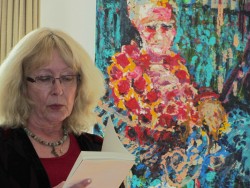
Me, reading at Secret Handshake Gallery May, 3013 at a triple launch co-hosted with authors Kathleen Whelan and David Bateman

Me, reading at Secret Handshake Gallery May, 2013 at a triple launch co-hosted with authors Kathleen Whelan and David Bateman (Photo: A. Resnick)

Make it an event to remember

So many books are being published now that most of us will wait in vain for a bookstore owner or an established reading program to invite us to come out and strut our stuff. The good news is that we don’t have to wait for anyone to invite us. For very little money, we can put on an event any old time we want to – to celebrate the publication of a new book, or just to celebrate being writers.

If you are new to writing, most of your guests will likely be family and friends who have not been to readings and book launches before. They will come to the event out of curiosity in part, but primarily to share your excitement and toast your achievement. Your number one goal as host should be to make sure that when they get there, they  have a fantastic time. (In fact, if that is not your goal, forget about doing it at all. This event is all about you,  but it is also not all about you, if you get my drift.) With some planning and some thinking, you can make those who attend your event eager to attend the next book-launch or reading: thereby doing a service to writers everywhere.

The first thing you need is a venue. You can hold your event anywhere. Last summer, I was well into the planning of a picnic-style book launch in a ravine park when a few well-wishers insisted that I think about the weather possibilities and hold it inside instead. (I still like the idea of an outside reading. I think I’ll do it at some point.)

What we did instead proved to be a great alternative. We held the launch at a small art gallery in Toronto which was very reasonable to rent for a few hours on a Sunday afternoon (it’s called the Secret Handshake Gallery on Mutual Street, and it is managed by the noted Toronto poet and artist David Bateman).

It had a kitchen, which was handy for preparing tea and coffee, washing fruit, and arranging plates of crackers, cookies  and dips. The same kinds of facilities would also be available in apartment-building party rooms, someone’s living room, the basement of a church, a community hall, etc. You don’t actually need a kitchen — think a room in a library, or the back room of a pub.

The next thing you need is a date and time. Give yourself plenty of lead time: you need to order books that will be available for sale, and you need to promote the event.

Begin the promotion three weeks or so ahead. Don’t rely on Facebook and Twitter: these sites are not too effective in attracting actual people to an actual event – although you will get lots of back-patting there, which always feels good. Check out where established reading series publicize readings in your area and submit a notice there (Open Book Toronto and Open Book Ontario are good examples from this region). You should also post notices on writers-organization events lists and in other arts publications. Your local newspaper or neighbourhood journal may also list your reading for free. If you are going to be reading at an art gallery or library, they probably have their own promotional methods – handouts and on-line items – and they will likely add your appearance to their list even though you are hosting it yourself, in the hope that you will bring people out to see other exhibitions or events they have on offer. And don’t forget that great “old-fashioned” method for spreading news: the email.

You need some kind of refreshments. These can be very modest: tea, coffee, juice, cookies, bottled water. Or you can get fancier and add wine, cheese, grapes, beer, tacos and dip, steak tartare and oysters – whatever you want, depending on your budget, your audience, the venue and the time of day. It’s true that people who’ve had a drink are much more likely to love your reading and buy a book than are the (tee)totally sober, but you have to figure out whether the potential payoff is worth it. Remember that you’ll need to sell several books to pay for even one half-decent bottle of wine: for economic reasons if none other, you may have to convince your guests to buy your books by giving an excellent reading rather than by lubricating them.

You might want to introduce a theme at your gathering that is in keeping with the subject of your book. When I launched The Whole Clove Diet, I invited people to bring Nanaimo bars – a sweet delicacy which figures largely in one of the novel’s comic scenes – in exchange for a free copy of the novel. Not only food, but decor, costume and music can be customized to suit the subject of your book.

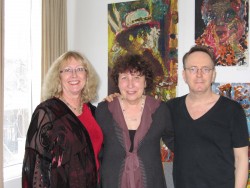
Mary W. Walters, Kathleen Whelan, David Bateman

To my left (your right), Kathleen Whelan and David Bateman, co-hosts and writers extraordinaire (Photo: A. Resnick)

You need books to sell (and autograph). This may sound obvious but I cannot tell you how many readings I have been to (including my own most recent one) where fate hung in the balance until the very day of the reading: would the books appear on a delivery truck in time for the event or not? Don’t give yourself a panic attack: order the books well in advance. (Of course, this problem will not occur if  you are dealing only in e-books, but I am not sure that you can hold a viable book launch if you only have an e-book. I could be very wrong about that. Perhaps I just haven’t thought it through properly. Reader input on this subject is welcome.)

You also need a book sales table, and someone to sell the books for you (that’s what friends are for). You will need to provide a float. If your book is $15, have some $5s on hand to give as change for the inevitable $20s you will receive. You might also want to prepare a handout featuring the title of your book and a sales link or order form as a takeaway for those who didn’t bring enough money – or in case you run out of books to sell.☺

You need an itinerary. Plan to read for half to three-quarters of an hour maximum, and figure out what time you intend to start. I don’t recommend starting right at the time that the event begins. It’s a party: not just a reading, so let people mix and mingle for half an hour or an hour before you read. (This also gives the latecomers a chance to arrive.) Think ahead about whether you want music playing in the background while people socialize. If so, you’ll have to organize that in advance as well. (It’s pretty simple to bring a laptop computer with a playlist on it and a couple of speakers, but someone has to do it.)

You need someone to introduce you. This person will need to get people’s attention when it’s time for you to read, invite them to be seated, turn off the music, etc. During the introduction, this person should point out where your books are available for sale and announce how much they cost. When it comes to your introduction, you might want to write it out yourself and email it to your introducer ahead of time, just to make sure that all the points you want covered are covered. If the person who is introducing you might be insulted by your writing your own blurb for him or her to read, you could send a list of points to cover. Or else you could hope for the best, and fill in any oversights yourself when it is time to read.

Even if only one or two people show up, carry on. Poor turnouts happen to lots of writers, even those who are invited to read by established reading programs and bookstore owners. No matter how few there are, you should read anyway. Those people came all the way across town/around the world/down the street to hear you, and you want to blow them out of the water. Also, reading to a very few people will be good practice for when you become as famous as Margaret Atwood and you have people lined up down the block to hear you read.

(I encourage you not to read like Margaret Atwood does, however. She can get away with a deadpan delivery, but most people cannot. Further to this bit of gratuitous advice, in my next blog post I am going to talk about how to give a good reading. Too many writers don’t and there is nothing worse than a boring or inept reading. The only comparable experience in my life was a philosophy class I took at university where the lectures were delivered at 8 a.m. by a prof who leaned against the blackboard with his eyes closed, and spoke like Margaret Atwood reads. He seemed to still be half asleep – his half met my three-quarters and no knowledge was transferred.)

You need a photographer. (This is also what friends are for.)

You need people to help you clean up afterwards. These same people should take you for a drink after all the cleanup is done so that you can celebrate the celebration. For if you have done it properly, it is only when your well planned, well delivered, fun event is over that you will actually be able to start enjoying it yourself.

______________________

Note to my FaceBook friends: I’m taking a break from Facebook, which has lately been turning into more of an addiction than a pleasurable diversion.  If you think some of our mutual Facebook friends would be interested in this post, please post the link as I can’t do that at the moment. Thanks. – Mary

Book Promotion Tip of the Week #12: Get Lucky, and Live with the Guilt

To Warn Prospective Buyers or Not To Warn: That Is the Question

This week, the outstanding American novelist Claire Messud published her fourth book of fiction. It is entitled The Woman Upstairs. My first novel (1989) is also entitled The Woman Upstairs.

The publication of Claire Messud’s new novel is an event that I, along with thousands of others, have eagerly anticipated. I read The Emperor’s Children, and was impressed. Messud has won several prestigious writing awards and, according to Wikipedia, was even “considered for the 2003 Granta Best of Young British Novelists list, although none of the three passports she holds is British.” That’s how good she is.

Little did I know that the publication of Messud’s newest book was going to be of some modest financial benefit to me. But it has been: ever since the pre-promotion started on her latest novel, sales of my first novel have increased. Not enough to save me from financial ruin, by any means: we’re talking maybe ten books a week total on amazon, including both the Kindle version and the paperback. (And who knows? Maybe one or two of those book buyers really did intend to buy my book.)

Nonetheless, it makes me uncomfortable. I feel like my book is selling under false pretenses, and that I should put some kind of warning on my book’s page on amazon – BEWARE: THIS MAY NOT BE THE NOVEL YOU THINK IT IS!!!

On the other hand, my name IS on my Woman Upstairs. I’m not trying to impersonate Ms. Messud. And I was there first, having chosen my title very carefully many years ago. (It refers to three entities: to the mother of my protagonist, who is dying in an upstairs room;  to the protagonist’s landlady and friend, who lives on the main floor of the house where Diana has the basement suite: and — of course — to the female correlative of “The Man Upstairs,” which is how some people refer to God.)

Occasionally someone returns a copy of my Woman Upstairs to amazon, and I can hardly blame them: in fact, I am surprised more of the people who have bought my book by mistake have not returned it. Maybe they don’t know they can.

Friends and loved ones tell me I should not feel guilty, but should just accept it. Not much else I can do, short of adding the warning, which is a silly idea really. (Titles are not copyrightable, by the way, and even if they were, I wouldn’t, so don’t even go there.) I sometimes wonder what will happen if Claire Messud’s Woman Upstairs wins some big award.  (You go, girl.)

I also hope that, having bought my book by mistake, perhaps a few people will accidentally read it, and will like it enough to purchase something else I’ve written  — like The Whole Clove Diet: A Novel or The Adventures of Don Valiente and the Apache Canyon Kid.

On the other hand, they might well intentionally read my novel, like it, and then go off and buy other books that Claire Messud has written. I guess that would be fair.

In the meantime, I’ll use some of my ill-gotten gains to purchase The (Other) Woman Upstairs, and maybe that will help to salve my conscience. Even though I was going to buy it anyway.

And I guess I’ll get back to work on my next novel (working title: Moby Dick).

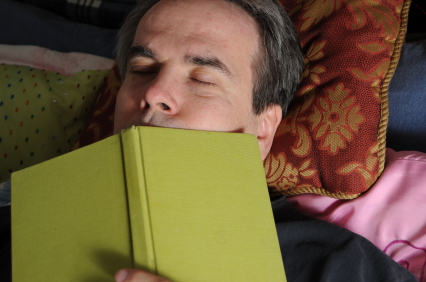
Do you fall asleep when you are reading?

militant writerSome people seem to fall asleep as soon as they start reading, especially if they are sitting somewhere comfortable, and almost always if they are reading in bed.

Other people intend to read a few pages before they go to sleep and end up, two hours later, forcing themselves to stop and turn the light out only because they know how they are going to feel in the morning if they don’t. (That’s me. Always has been. I am currently reading A Widow for One Year. It was 1 a.m. for me again last night.)

The falling-asleep-or-not response does not seem to have to do with content. I can stay awake reading books that are so boring they might as well be instruction manuals on how to watch paint dry. And those people who nod off as soon as they’ve opened their books often actually really do want to find out what happens next but, page-turner or not, they just can’t help themselves.

militant writer istockphotoI do not believe this is a gender issue (despite the fact that I have known more men who fell asleep while reading than women, and despite the images I’ve chosen for this article). One of my dearest friends (love ya, Bonnie) wears old glasses that have an arm missing to read in bed because she knows that she’s going to end up sleeping on them anyway.

I also don’t think that those who nod off are more tired than those who don’t. No matter how tired I am, I don’t think I have EVER fallen asleep with a book open in front of me.

Maybe it’s neurological.

Maybe the same people who fall asleep over books also fall asleep in movies.

Someone should do a study.

Maybe someone has.

I wonder if any readers who fall asleep over books are also writers, and if those people also fall asleep while proof-reading their own stuff.

Does anyone out there know anything about this?

Do We Have an Obligation to our Books To Market Them? A Legal Precedent Involving a Family Shrine Provides Some Food for Thought

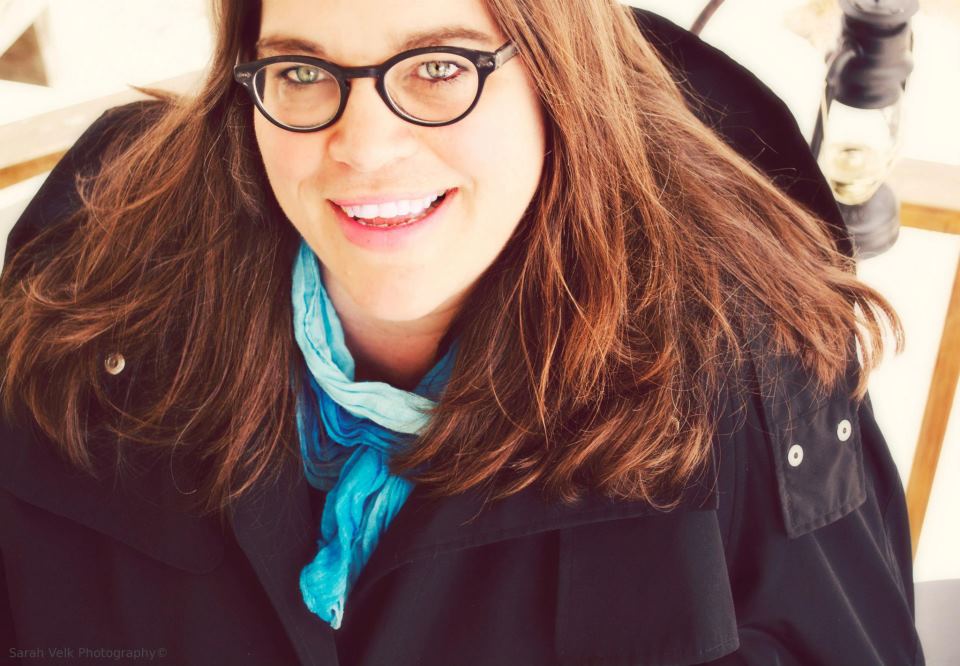
Kim Velk

Kim Velk

a guest post by Kim Velk

Note from Mary: I am delighted to welcome guest blog-poster Kim Velk, a regular reader of (and comment contributor to) The Militant Writer. Our exchanges via the comments and then email led to me to ask her to put her thoughts down on paper for the enjoyment and provocation of us all. (Update April 16: Kim’s first novel, UP, BACK, AND AWAY, is now available! Yesterday was publication day! Congratulations!) Here’s Kim:

In my day job I am a lawyer. And while I don’t practice corporate law, I have often found myself thinking of the fundamental idea underpinning the law of corporations – and never moreso than when I consider how I am going to approach the task of informing the indifferent world that I have a book (or soon will) that I want it to buy.

If you’re reading Mary’s blog, you are very likely in a similar circumstance: that is, trying to figure out how – or maybe even whether – you should peddle your book to a public that, let it be said, really doesn’t care. This is a not a happy place. The writing part was hard enough, but at least we signed up for that. This next part, this selling bit, that’s another matter. It falls somewhere on the scale between distasteful and odious (at least for a lot of us). Our writerly unicorn spirits aren’t equipped for the rough and tumble of the floor of the bourse! We wrote because we’re writers! We’re not ad men, or PR people, or entrepreneurs.…

Yet, even for those who are traditionally published, we all know (or have heard), that the big world of books demands author participation in the selling part these days. For the self-published (we the semi-despised, the rich pickings for those with author marketing services to sell), we are really on our own. No agent or marketing team for us. If our poor little books are going to go anywhere, we’re the ones who have got to shift them.

I don’t have advice on the best way to do that. (Waving at Mary here. Thanks Mary for your excellent advice on this blog). In fact, I haven’t even tried to sell a book yet and I may be altogether crap at it. The task looms in my immediate future, however, and as I have tried to face it, I have turned to the guiding light of, yes, corporate law.

That’s what I came here to share:  an idea that I hope may at least put some heart into those of us who quail before that dismal marketing endeavor. Courage, mes amis! The Privy Council worked out a little trick of the mind a long time ago that may come in handy for us now.

Legal Fiction Is a Mighty Fiction

The Judicial Committee of the Privy Council served historically as the highest court of appeal from Britain’s colonies and it still serves in that capacity for “Crown Dependencies, the British Overseas Territories, and a number of Commonwealth member countries.” (Thanks, Wikipedia.)

I went to law school at McGill University in Montreal and as a result I was exposed to a lot of legal precedents generated by the English House of Lords and the Privy Council. (Canadians could still take appeals over to London until after World War II). A friend of mine took the French language corporations class (one of the awkward charms of the McGill faculté de droit is its bilingual nature.) She told me that in the first lecture, the very correct Belgian professor explained how, once upon a time, a family in India fell to feuding over who would have what duties and responsibilities for maintaining the shrine of a family idol.

No one was doing what he was supposed to do. Offerings were skipped, dust and dirt collected. “L’idole” was being shamefully neglected while the family feuded and pointed fingers. The dispute was at last carried to the Privy Council back in England. In a powerful flash of insight, some brilliant councilor required the litigants to take a new approach to their god. They were to “incorporate” it – that is, imagine it as having a body, a corpus, as being an entity unto itself, one that was separate from its keepers and one that was owed duties of care, loyalty, and good faith.

The councilor thus re-imagined an inanimate thing as a real, living thing, and one that required something like a guardianship. Its keepers were recast into what would eventually morph into directors of a corporation. As such, they were obliged not to look out for their own selfish interests, but for the best interests of the entity they served. Et voila – the legal fiction gave birth to the “legal person.”

Fast forward a few hundred years, and this idea has remade the world. Of course the history of corporate law is a lot more complicated than I just made it seem and any real corporate lawyer or legal scholar who stumbles in here is probably shaking his or her head over something I have said, but the Big Idea is what I wanted to convey and only for the limited purpose I’ve already described. (By the way, the occupy Wall Street protestors who railed against corporate personhood were really missing something basic in their attack. This trope of the mind [and the law] has made many things possible that might never have been achieved: universities, big events, nonprofits, you name it. Of course, it has also allowed lots of evildoers to hide behind their corporate structures, but that’s someone else’s blog post.)

One Way Forward

OK class. What does all this mean for us? I think it means that we might best approach the business of book marketing by, at least some of the time, separating ourselves from our work – by thinking not in terms of what we can face, or what we want to do, but what is our duty to the book? What is in its best interests?

Hmm. What might this mean? Doing what we can to see the book reaches its potential? Getting it to an audience for whom it will have some meaning, or to whom it will give understanding, joy, or entertainment? (We all gotta serve someone, like the song says, and this includes our new little rectangular or digital legal people.) Perhaps also securing for them some future? (They will live after us, even unto our children’s children.) I think this question of goals requires some soul searching for us all. Once those are identified, the next question is: how is this to be done?

As noted, I’m still trying to work this out for myself. One thing I hasten to add, despite all I have said here, is that the public imagination does not much separate a creator from his or her work. What we do by way of marketing will have repercussions for our books. This may mean forbearance in some arenas. As Mary has noted, if we turn off readers with a lot of ham-fisted hard selling on Facebook or Twitter, for instance, we are likely doing our books a disservice. We really have to think about what’s best for them – and the answers may not be easy to find.

Maybe we owe our creations a little bit of money, if we can scratch it together, to spend on marketing (if we can find a reputable vendor). Maybe we need to try to interest editors of various publications, or an agent who will take on the book or its writer. All that is TBD. The only thing that this concept makes plain is that doing nothing is not an option. Nothing = a dereliction of duty.

And in Conclusion…

We have sweated over these books, and lavished our care and our attention on them. (If you haven’t, never mind about everything I just said. Do yourself and the world a favor and just put whatever you have written back on the flash drive and leave it there.) For the rest of us, our books live now, and they are owed some respect – from us first of all. To be cringing or pusillanimous about introducing them, in the best way we can manage, to the world beyond our writing rooms is a disservice to ourselves, and maybe worse, to our creations.

Kim Velk lives in Vermont with her husband, two children, and a terrier.  She works by day as a lawyer.  Her first book, Up, Back, and Away, is about a Texas teenager sent back to England in 1928 (on a vintage English three speed).  It will be out on Amazon later this month.  She blogs at www.quartersessions.blogspot.com and www.lasthouse.blogspot.com